By: Lauren McKinney, Middle School Teacher, Sangre De Cristo School District, CO
What support looks like when resources are limited and students start in different places
Science intervention is often described as something that happens in a separate room, during a separate class period, led by a separate person. In a small rural school, that version of intervention is mostly theoretical.
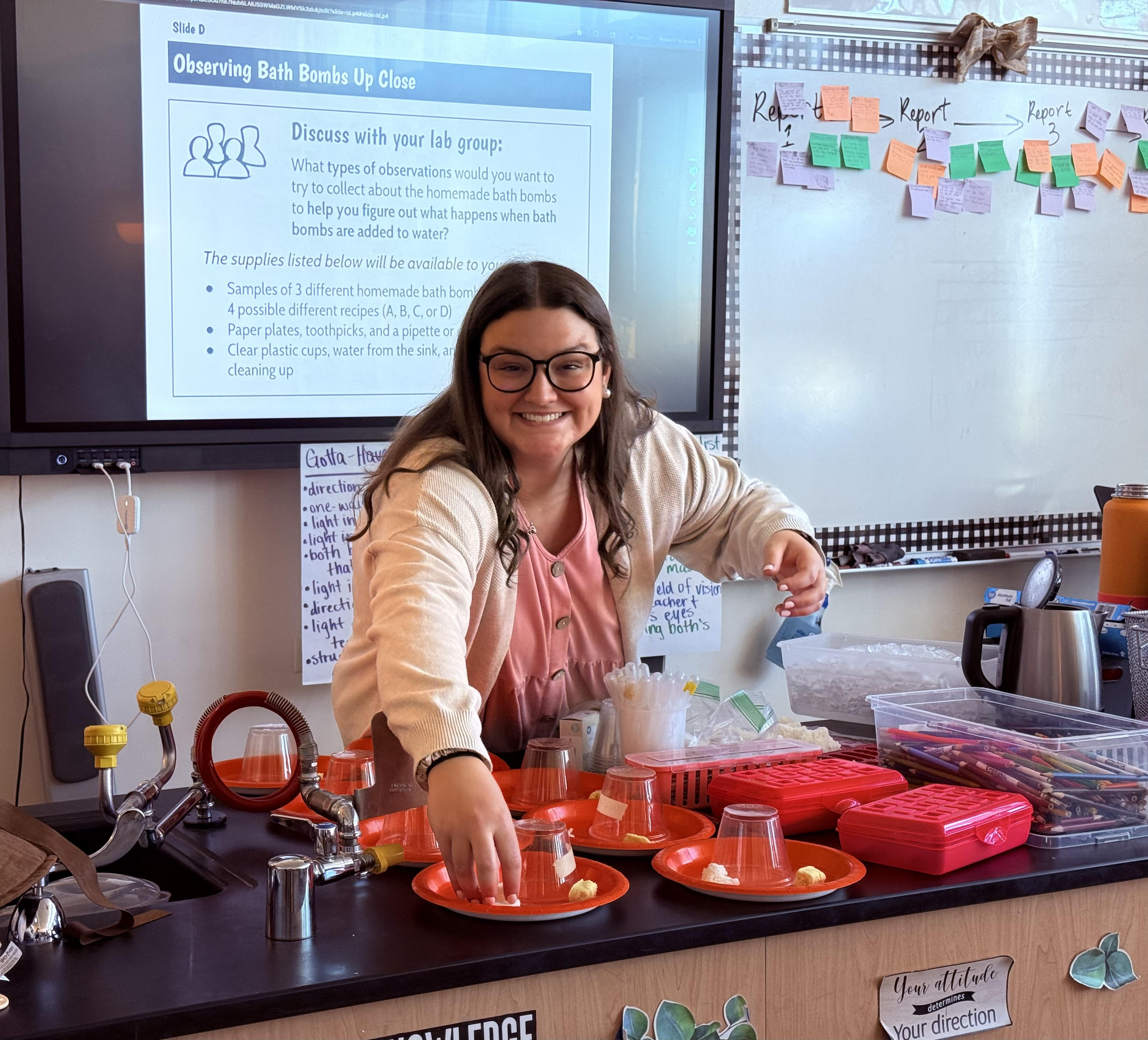
At my school, there is one middle school science teacher. That’s me. There is no extra intervention block built into the schedule and no additional staff member waiting in the wings. Like most teachers, I’ve worked with intervention in many forms—through special education supports, school-wide programs, and adjustments made within my own classroom. In a rural setting, though, intervention looks different.
With limited staff and a wide range of student needs, rural schools often have to make hard decisions about where to focus their resources. Most of the time, that focus is on math and reading. That makes sense. Strong literacy and numeracy skills are essential, and those supports matter deeply. At the same time, science sits at the intersection of both. Students are expected to read complex texts, interpret data, and explain their thinking using precise language. When students struggle in science, it’s often because those foundational skills are being stretched in new ways.
That reality has forced me to rethink what science intervention actually looks like and what it needs to look like in a rural classroom.
Intervention Doesn’t Come with a Label
One of the first lessons I learned is that intervention works best when it doesn’t feel like intervention. Students don’t benefit from being singled out or pulled aside in ways that make them feel behind. In science, especially, confusion is part of the learning process. If we treat every misunderstanding as a problem, students quickly stop taking risks.
Instead, intervention in my classroom is built into daily instruction. Students revisit ideas, retry assignments, and encounter the same vocabulary more than once and in more than one context. Needing more time is treated as normal, not exceptional.
Gaps Exist (Whether We See Them or Not)
In a rural school, students come with a wide range of experiences. Some have had consistent science instruction year after year. Others have had interruptions, gaps, or very limited exposure to certain topics. Those gaps don’t always show themselves right away.
For a long time, I didn’t always know where those gaps were until we were already deep into a unit. That made intervention reactive instead of intentional. Over time, I’ve learned the importance of identifying learning needs earlier so support can happen before frustration sets in.
Vocabulary Is the Sneakiest Barrier
If there is one consistent obstacle in science learning, it’s vocabulary. Students can often describe what they’re seeing but struggle to explain it using scientific language. When students can’t find the words, it can look like they don’t understand the concept—even when they do.
Intervention often looks like repeated exposure to language in context. Seeing terms used to explain phenomena, paired with visuals, and revisited over time helps students move from recognizing words to actually using them.
What I’ve Learned About Intervention
Science intervention in a rural school isn’t about adding more programs or carving out extra time. It’s about building flexibility into everyday instruction, normalizing the need to revisit ideas, and creating systems that support students without drawing attention to what they don’t know yet.
It isn’t flashy, and it doesn’t come with a special schedule. But it works.
How Penda Supports Science Intervention in My Classroom
While intervention is rooted in daily instruction, having the right tools in place makes this work sustainable. Penda has become an important part of how I support science intervention in my classroom.
Penda allows me to identify learning gaps through flexible assessments that I can use when it makes sense instructionally, rather than relying only on traditional benchmarks. This helps me respond to student needs earlier and more intentionally.
The platform also supports students in revisiting content on their own terms. Unlimited retries and self-paced assignments allow students to spend more time on challenging concepts without feeling singled out, while others can move forward when they are ready.
Science vocabulary is another area where Penda has made a noticeable difference. Clear definitions, visuals, and examples help students connect language to what they are observing in class. Over time, this repeated exposure helps turn unfamiliar terms into usable scientific language.
In a rural school, consistency matters—especially when I am out of the classroom. Penda provides a familiar structure where students can continue reinforcing content and building understanding, rather than completing disconnected activities. This builds a confidence in students to be ok in the unknown.
Finally, Penda’s reporting and automatic grading help save time while still giving me meaningful insight into student learning. This allows me to focus more on instruction and student support, which is critical in a one-teacher science department.